Lake Shoreline Restoration by Granite Companies
Lake shoreline restoration is a specialized site work service that repairs eroded banks, installs protective barriers, and rebuilds waterfront edges damaged by wave action, ice heave, and fluctuating water levels. Granite Companies delivers top-rated shoreline solutions across residential and commercial lakefront properties.
5 Highlights on Lake Shoreline Restoration
Riprap Installation
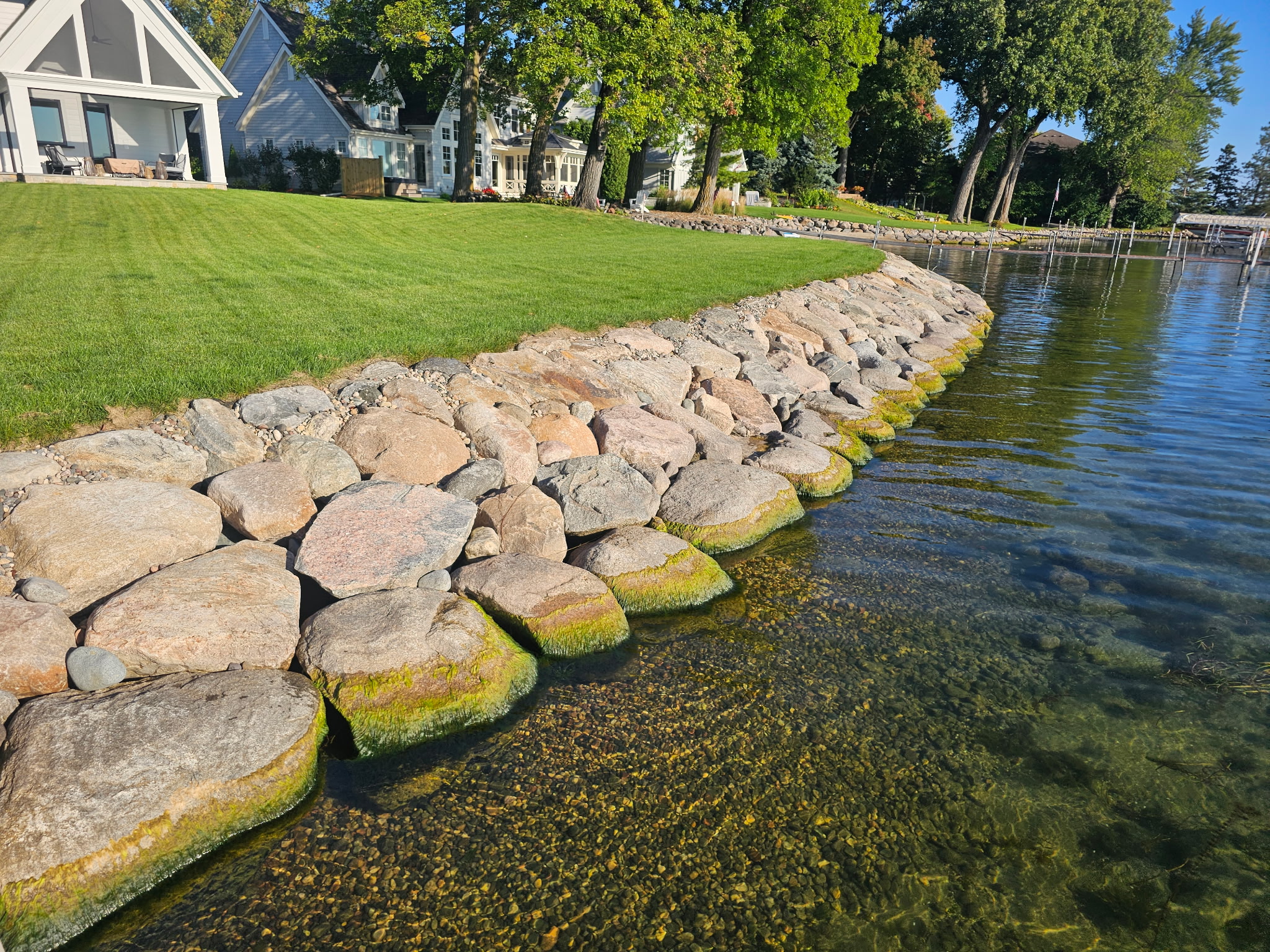
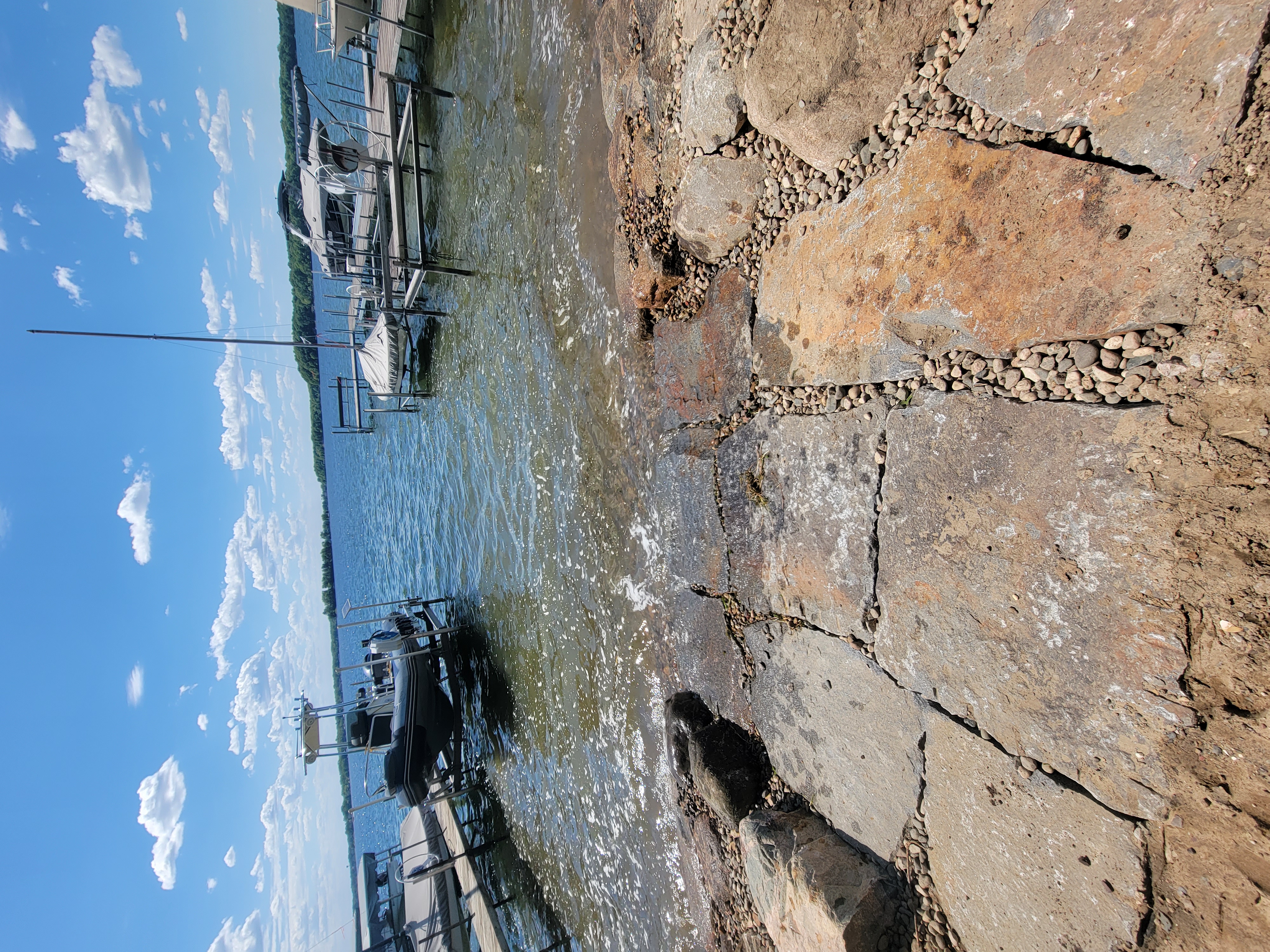
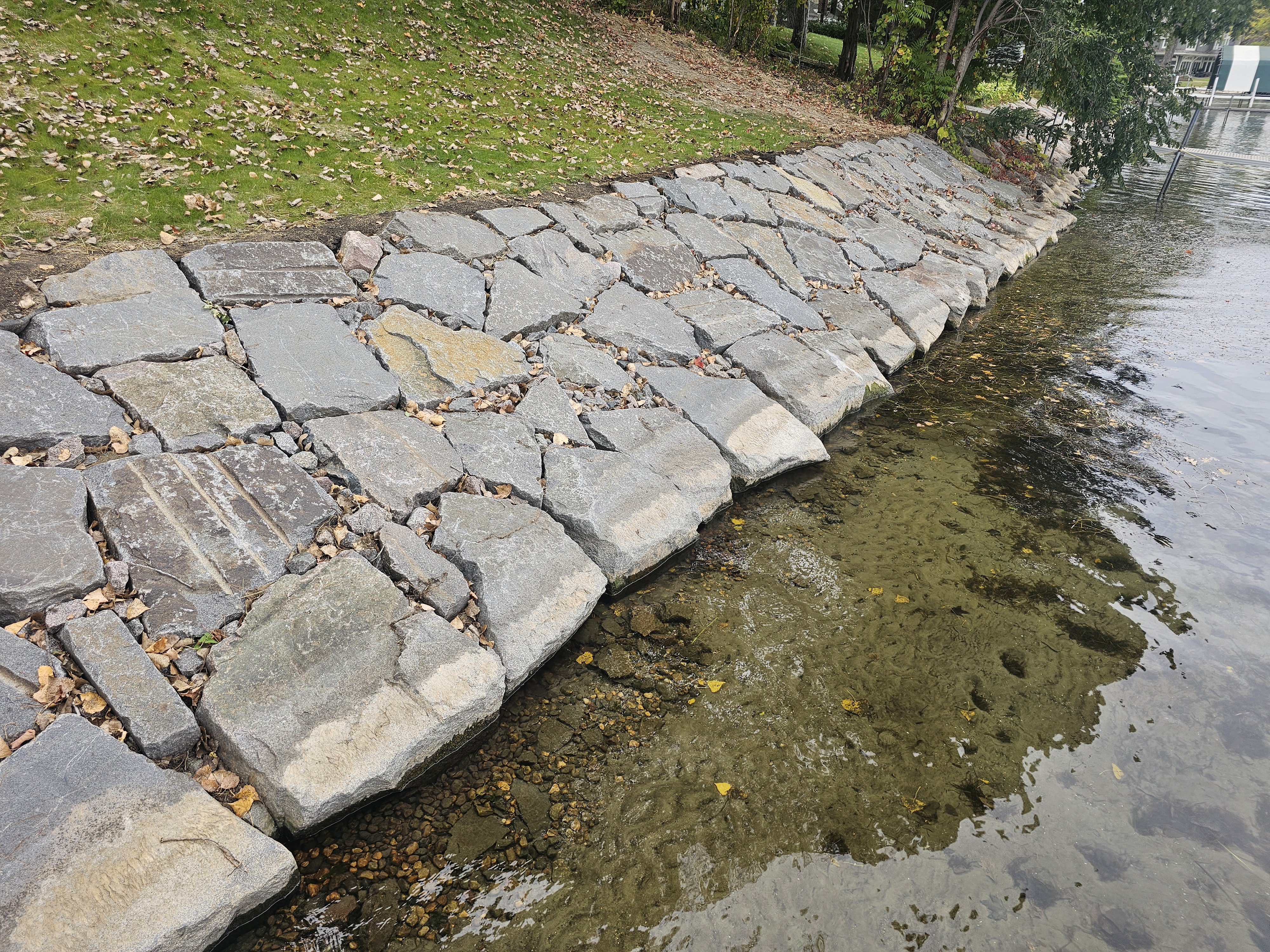
We place graded granite and fieldstone riprap along eroded banks to armor your shoreline against wave energy and ice damage.
Bioengineered Stabilization
Our crews install coir logs, live stakes, and native plantings that anchor soil while supporting fish habitat and water quality.
Retaining Wall Construction
We build segmental block, boulder, and timber seawalls engineered for hydrostatic pressure and frost conditions.
Grading and Drainage Correction
Our team regrades slopes, installs French drains, and redirects stormwater runoff that accelerates bank erosion.
Permit Management
We handle DNR, Army Corps of Engineers, and local watershed district permits so your project stays compliant from start to finish.
Why Choose Our Lake Shoreline Restoration
Lake shoreline restoration from Granite Companies is backed by licensed contractors, certified erosion control specialists, and decades of combined site work experience on lakes, ponds, and reservoirs. Our reputation comes from finished projects that hold up season after season.
We survey every shoreline before we quote. Our estimators measure bank height, assess soil composition, document wave exposure, and identify ice heave patterns specific to your lake. That data shapes a restoration plan built for your property, not a generic template.
Our crews hold certifications in erosion and sediment control. We carry full liability insurance and workers' compensation coverage on every job site. Each project includes a written workmanship warranty on walls, riprap placement, and grading.
Clients choose us because we own our equipment. Excavators, skid steers, barges, and material haulers arrive on schedule because we don't wait on rental availability. That control keeps timelines tight and budgets predictable.
We also coordinate directly with regulatory agencies. Shoreline work near public waters requires permits, setback compliance, and sediment control plans. Our project managers prepare the documentation, schedule inspections, and communicate with county officials on your behalf. You get one point of contact from consultation through final walkthrough, and we answer questions in plain language at every stage.
Signs You Need Lake Shoreline Restoration
Lake shoreline restoration becomes necessary when erosion, structural failure, or drainage problems threaten your waterfront. Watch for these five warning signs on your property.
1. Undercut or Slumping Banks
Wave action carves away soil beneath the bank face, leaving an overhang that eventually collapses. If you see exposed roots, vertical scarps, or chunks of turf sliding toward the water, your bank has lost structural integrity and needs stabilization.
2. Receding Shoreline
Compare your current water edge to older photos or survey markers. Many lakefront owners lose one to three feet of shoreline per year to unchecked erosion. That loss shrinks your usable yard and can encroach on septic systems, patios, and outbuildings.
3. Failing Seawalls or Riprap
Cracked concrete, tilting retaining walls, displaced riprap stones, and washed-out backfill all signal that your existing shoreline armor has reached the end of its service life. Ice heave and frost jacking accelerate this failure in northern climates.
4. Murky Water and Sediment Plumes
Sediment washing off your bank clouds the water near your dock and smothers aquatic vegetation. Persistent turbidity after rainstorms points to active erosion that restoration can correct at the source.
5. Standing Water and Runoff Channels
Gullies cutting through your lawn toward the lake indicate concentrated stormwater flow. Left unaddressed, these channels widen, strip topsoil, and dump nutrient-loaded runoff into the water. Regrading and drainage installation stop the damage before it spreads.
If any of these signs appear on your lakefront, schedule an inspection promptly. Early intervention costs far less than rebuilding a collapsed bank.
Our Lake Shoreline Restoration Process
Lake shoreline restoration at Granite Companies follows a structured six-step process that moves your project from assessment to completion with clear communication at every phase.
Step 1: Site Assessment
Our estimator walks your shoreline, measures erosion severity, tests soil stability, and photographs problem areas. We evaluate wave exposure, water depth, and access routes for equipment.
Step 2: Design and Proposal
We draft a restoration plan with material specifications, grading details, and a line-item quote. You review options such as riprap, bioengineering, or retaining walls before anything moves forward.
Step 3: Permitting
Our project managers file applications with the DNR, watershed district, and county zoning office. We prepare sediment control plans and schedule required pre-construction inspections.
Step 4: Site Preparation
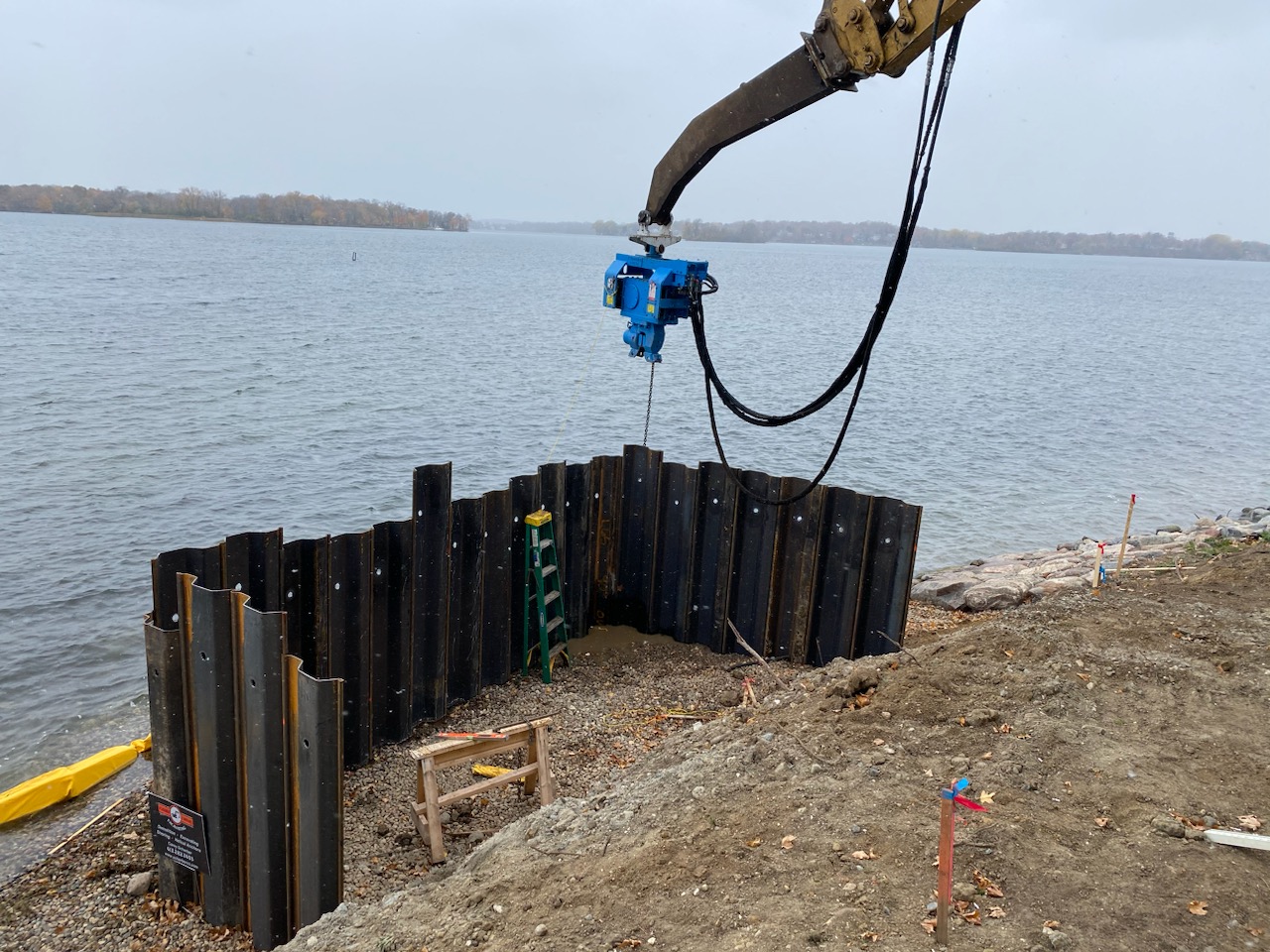
Crews install silt fencing and floating turbidity barriers, stake the work zone, and protect trees and structures. We establish equipment access that minimizes lawn disturbance.
Step 5: Restoration Work
We excavate failed material, regrade the bank to a stable slope, lay geotextile fabric, and place riprap or construct walls to specification. Bioengineered projects receive coir logs, erosion control blankets, and native plantings.
Step 6: Final Inspection and Cleanup
We restore disturbed turf, remove barriers after inspection approval, and walk the finished shoreline with you. Your warranty documents and maintenance guidance arrive before we leave the site.
Brands We Use
Lake shoreline restoration demands proven materials and dependable equipment, which is why Granite Companies partners with trusted manufacturers on every project. Quality products protect your investment and keep our crews safe.
Caterpillar
excavators and skid steers for bank grading
John Deere
compact track loaders for tight lakefront access
Bobcat
mini excavators for precision work near docks
Tensar
geogrid reinforcement for retaining walls
Mirafi
woven geotextile fabric beneath riprap
Versa-Lok
segmental retaining wall block systems
Redi-Rock
large block gravity walls for tall banks
North American Green
erosion control blankets
RolanKa
coir logs and natural fiber stabilization products
Vulcan Materials
graded riprap and aggregate stone
Every material meets ASTM standards and agency specifications for work near public waters. Our operators complete OSHA safety training, and we enforce strict protocols for equipment operation near water, including spotters, barge safety checks, and daily site inspections. Safe crews build better shorelines.
Shoreline Project Photos
FAQs About Lake Shoreline Restoration
What is lake shoreline restoration?
Lake shoreline restoration is the repair and stabilization of eroded or damaged lakefront banks using riprap, retaining walls, regrading, and native vegetation. The work stops soil loss, protects structures, and improves water quality along your property.
When is the best time to restore a shoreline?
Late summer and fall offer low water levels and firm ground for equipment access. Winter work on frozen ground suits some projects, while spring scheduling depends on permit timelines and runoff conditions.
Why does my shoreline keep eroding?
Wave action, boat wakes, ice heave, and stormwater runoff strip soil from unprotected banks. Steep slopes and bare soil erode fastest. Restoration addresses the cause, not just the symptom.
How long does shoreline restoration take?
Most residential projects finish in three to ten days once permits clear. Permitting itself can take four to eight weeks depending on your county and watershed district.
Can I restore my shoreline without a permit?
No. Work below the ordinary high water line requires DNR and often Army Corps approval in most states. We manage the entire permitting process for you.
Does riprap or a seawall work better?
Riprap absorbs wave energy, costs less, and handles ice heave well. Seawalls suit vertical banks and limited space. Our assessment identifies the right fit for your site conditions.
How much does lake shoreline restoration cost?
Pricing depends on bank length, height, material choice, and access. We provide free on-site estimates with line-item quotes so you know exactly what you're paying for.
Get a Shoreline Quote
Talk to our shoreline experts. We'll assess your property and provide a detailed estimate.
Request Estimate callChris: (651) 341-0438 callCorey: (612) 282-7403Key Information
MN DNR Permits
We advise on shoreline permit requirements for Minnesota lakes and waterways.
Natural Materials
We use granite and natural stone — materials that integrate with Minnesota's natural landscape.
Heavy Equipment
Our fleet handles large stone placement in challenging lakefront and riverbank conditions.